In the rapidly evolving digital landscape, launching an online store is easier than ever. However, choosing the foundational infrastructure for your business is a high-stakes decision. E-commerce entrepreneurs and enterprises constantly find themselves at a critical crossroads: Custom E-commerce Development vs. Pre-built Platforms (like Shopify, WooCommerce, or Magento).
While off-the-shelf templates offer a quick launchpad, fast-growing brands eventually hit a structural ceiling. To help you make an informed decision, this comprehensive comparative guide evaluates both approaches across flexibility, scalability, security, cost, and long-term ROI.
What is Pre-built E-commerce?
Pre-built platforms are SaaS (Software as a Service) or open-source solutions that provide ready-made infrastructure, templates, and plugins to get an online store up and running with minimal coding. Examples include Shopify, BigCommerce, and WooCommerce.
What is Custom E-commerce Development?
Custom e-commerce development is building a tailor-made online store from scratch using specialized technology stacks (such as Node.js, React, Python, or PHP frameworks). Every feature, workflow, design element, and database integration is architected specifically to match your exact business model and operational logic.
The Ultimate Comparison: Custom vs. Pre-built Platforms
1. Design Flexibility and Brand Identity
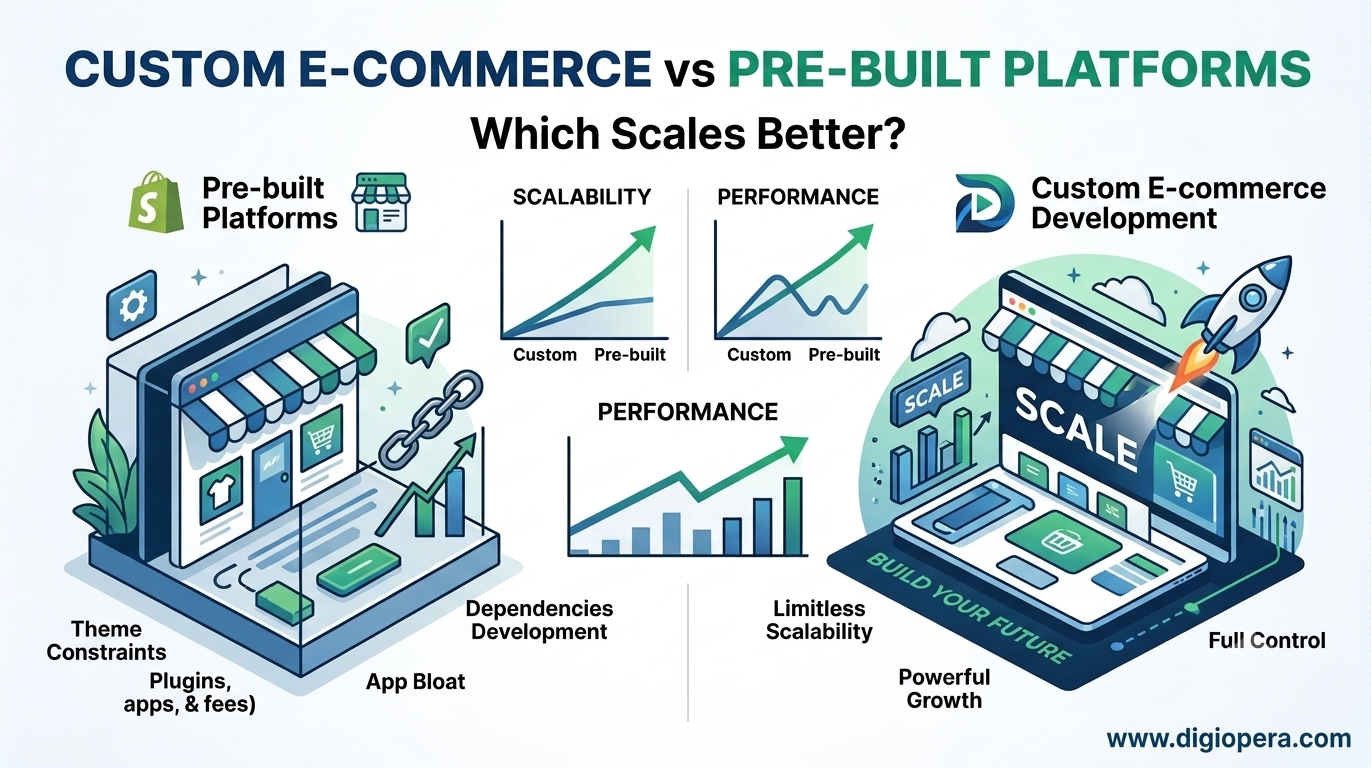
- Pre-built Platforms: You are largely restricted to existing themes and templates. Even with deep customization, you are bound by the framework's core layout constraints, often resulting in a website that looks structurally similar to thousands of other stores.
- Custom Development: There are zero design limitations. You can create immersive, highly interactive, and completely unique front-end user experiences (UX/UI) that align flawlessly with your brand identity and maximize conversions.
2. Scalability and Performance Speed
- Pre-built Platforms: As your product catalog grows and traffic spikes, pre-built platforms can suffer from sluggish loading speeds. This slowdown happens because they rely heavily on third-party apps and plugins, which bloat the site's underlying code.
- Custom Development: Built with clean, optimized code tailored only to what you need. Custom e-commerce platforms can leverage microservices and headless commerce architecture, ensuring ultra-fast page load speeds and seamless handling of massive concurrent traffic spikes.
3. Integration with Third-Party Systems
- Pre-built Platforms: While they offer APIs and marketplaces for popular tools, integrating complex, proprietary legacy systems (like custom ERPs, advanced CRM workflows, unique inventory management systems, or local logistics providers) can be incredibly difficult or completely impossible.
- Custom Development: Built to connect effortlessly with any external software. Whether you use a highly specific supply chain matrix, proprietary fulfillment software, or automated accounting systems, custom code allows for bidirectional, real-time data sync without breaking.
4. SEO and Digital Marketing Autonomy
- Pre-built Platforms: They provide standard SEO features like meta tags and sitemaps but limit your ability to modify URL structures, optimize deep server-side indexing, or implement advanced schema markup across unique landing pages.
- Custom Development: Grants full control over your technical SEO architecture. You can optimize every line of code, control canonical rules dynamically, design custom programmatic SEO pages, and achieve perfect Core Web Vitals scores—giving you a massive competitive edge on Google Search rankings.
5. Security and Data Compliance
- Pre-built Platforms: They handle basic security, but because open-source plugins and platforms are widely used, they are frequent targets for hackers. A vulnerability in a single popular plugin can leave your entire customer database exposed.
- Custom Development: Offers enterprise-grade security. Because the code source is proprietary and unique, it is significantly harder for automated bots to breach. You can implement custom data encryption, strict access controls, and tailored compliance measures (PCI-DSS, GDPR, CCPA) engineered explicitly for your business.
Cost and ROI Analysis: Short-term vs. Long-term
The financial dynamics of this decision are often misunderstood by business owners:
- Pre-built platforms have a low barrier to entry but carry escalating recurring expenses. Monthly subscriptions, transaction fees per sale, premium theme renewals, and stacking app subscription costs can quietly drain thousands of dollars every month as your volume grows.
- Custom development requires a higher upfront investment for design, architecture, and development. However, once built, your operational overhead drops drastically. There are no revenue-sharing transaction fees or compounding app subscriptions, resulting in a much higher ROI and a lower total cost of ownership (TCO) at scale.
The Verdict: Which One Should You Choose?
Choose a Pre-built Platform if: You are a startup testing a new product market, have a limited initial budget, have standard business workflows, and need to launch your store within a matter of days.
Choose Custom E-commerce Development if: You are an established brand looking to scale exponentially, have complex operational workflows, require highly specialized product builders or subscription configurations, or want to build an asset that increases your enterprise valuation.
Want to discuss your project? Book a free consultation →